
History of Prater’s Mill Country Fair
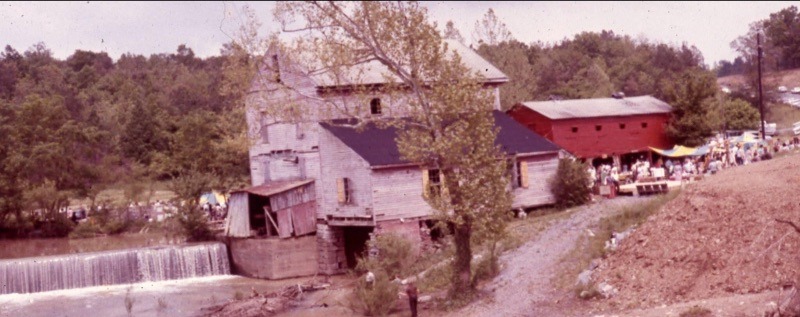
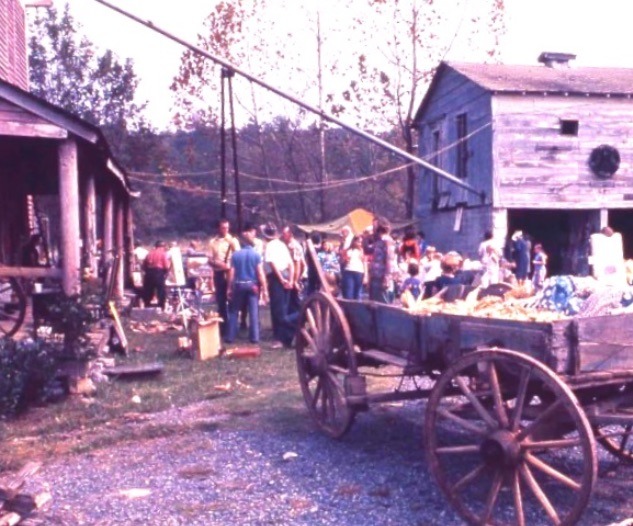
It was on a Sunday afternoon drive in 1971, when Judy and Wayne Alderman discovered the deteriorating Prater’s Mill. They decided the mill had to be saved. The slogan “Save Prater’s Mill” became the motto to mount a charge against the degradation of the mill structure. Starting Mother’s Day weekend 1971, a few friends and families held the first of monthly fairs to raise funds to begin repairing the 1855 Prater’s Mill.
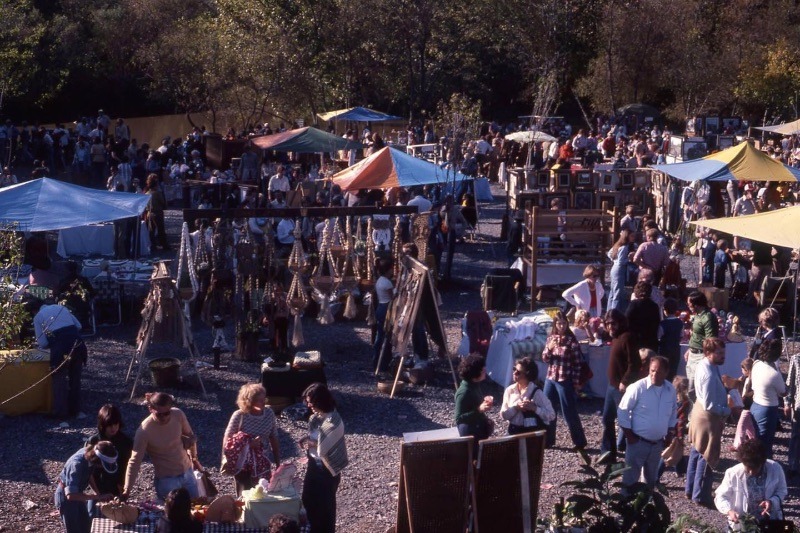
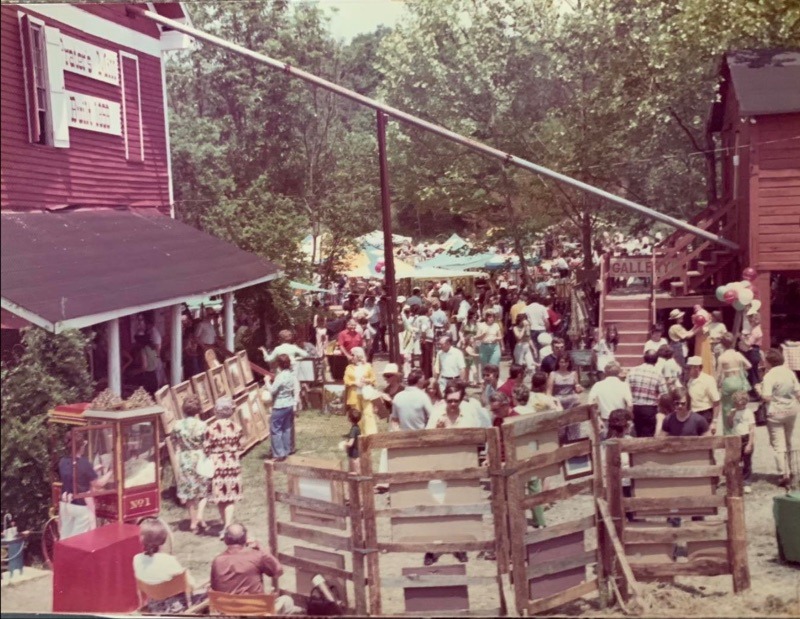
The community supported the small fairs which quickly grew into the renowned Prater’s Mill Country Fair. The Fair was a family-run operation for many years, held twice annually, on Mother’s Day weekend and Columbus Day weekends. The Mother’s Day Fair, often held with rain and low attendance, was cancelled in 2002.
A group of family and friends with the common goal of Saving Prater’s Mill, worked tirelessly for months before each fair repairing the buildings and transforming the property to support the Fair. Trees were planted to mark key points for fair booth layout. The gears, belts, turbines, and other mill machinery, were restored to working order so that cornmeal and grits could be sold at the fair.
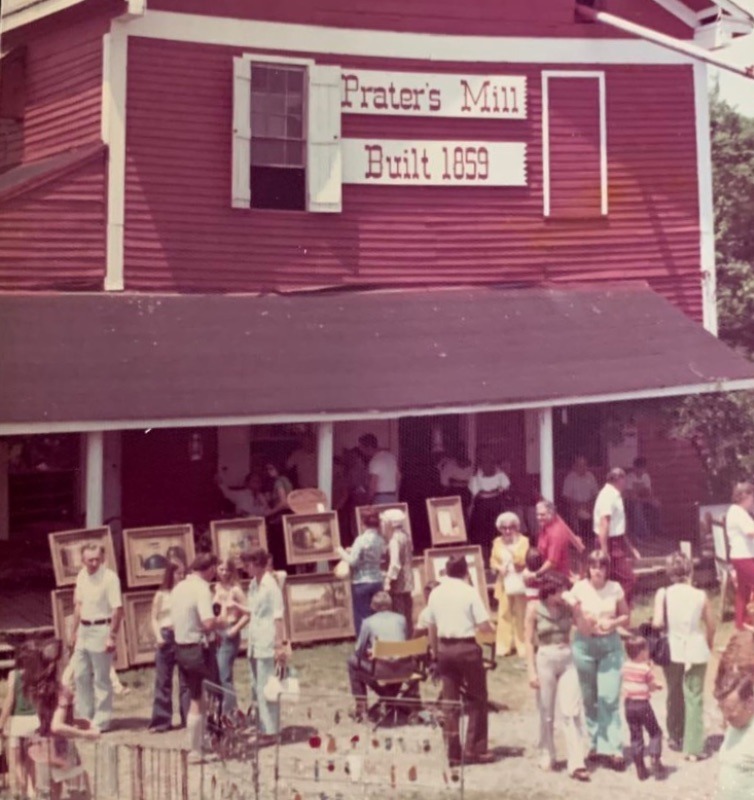
The 1980’s and 90’s saw a boom in fair attendance. The Country Fair was featured in Southern Living and received many accolades. Many exhibitors became endeared to the show’s community and are still remembered fondly: Papa Flea who made brooms, Judd Nelson, a fifth-generation blacksmith, Bessie Mae Adams a retired teacher who spun cotton at the Fair, Frank Painter, a wood carver who was
also a local radio talk show host, and Granny Reed, a colorful character who grew and sold house plants. The Prater’s Mill Foundation continues to seek quality products handcrafted from natural materials by arts and crafts exhibitors.
The Prater’s Country Store was opened to visitors in the late 70’s. In the early 80’s the Westbrook Barn was donated by Collins & Ackman and, with great fanfare, was moved to the property. The first Doctor’s office in the county was also relocated to the site.
Despite the Country Fair success, Foundation members knew there would never be adequate funding to maintain the mill for future generations. Public ownership of the mill became the goal. In the 1990s, an initiative was begun to convince state legislators to make Prater’s Mill a state historic site. When the initiative with the state was not successful, Foundation leadership turned their attention to Whitfield County, with the vision that the site would become a local public property. The vision was realized in 2010, when Dalton Asphalt Company, owned by brothers Jim and Kenneth Boring, conveyed the land to Whitfield County.
The 1855 Prater’s grist mill operated during each Country Fair, making corn meal
for sale at the Fair until 2023, when County officials closed the mill due to a
compromised foundation. Plans are in place to renovate the mill and make other
significant improvements to the property, but various delays have precluded
improvements to date. It is the Prater’s Mill Foundation’s hope that Whitfield
County will finally restore the mill to its early glory. The Foundation is committed to
presenting the rich history and heritage of the mill complex to the community at
the Country Fair.